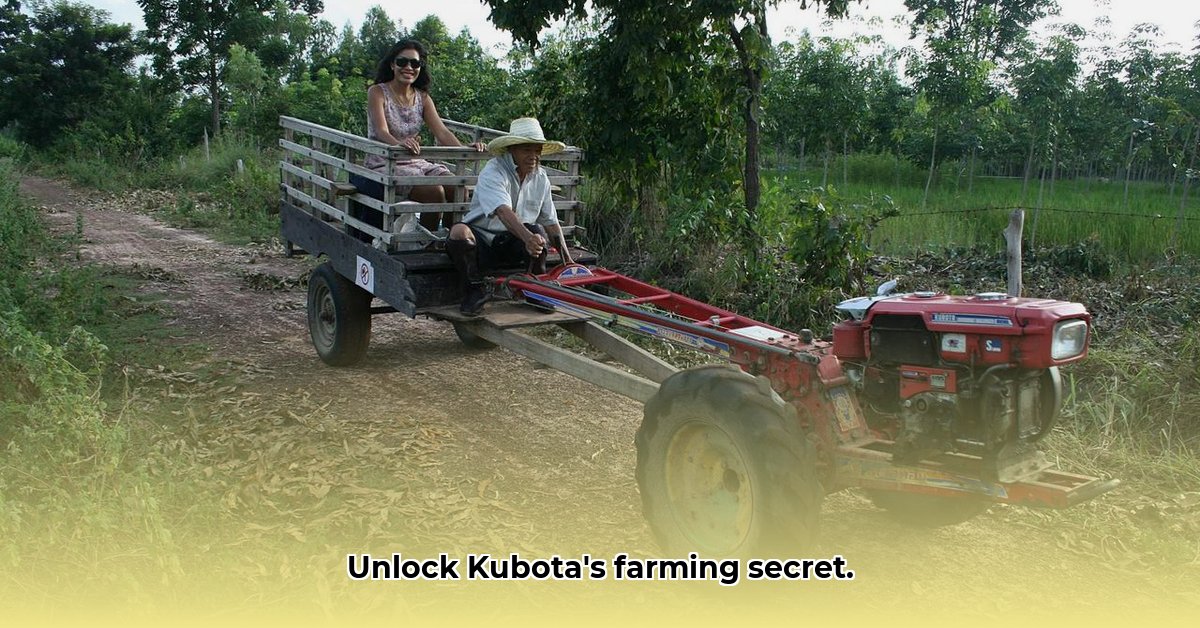
Kubota 2-Wheel Tractor: Your Partner in Sustainable Agriculture
Sustainable farming practices are crucial for the future of food production. The Kubota 2-wheel tractor emerges as a powerful tool, enabling farmers to cultivate their land efficiently while minimizing their environmental impact. Its compact size and user-friendly design make it ideal for various sustainable farming techniques. Isn't optimizing resource use and minimizing environmental damage a key goal for every modern farmer? For added comfort, check out these tractor seat covers.
Precision Farming: Maximizing Resource Efficiency
Precision agriculture focuses on optimizing resource allocation – fertilizer, pesticides, and water – to enhance yields while reducing environmental impact. The Kubota 2-wheel tractor excels in this area. Its maneuverability allows precise application of inputs directly to where they are needed, reducing waste and ensuring maximum impact. This targeted approach significantly reduces the amount of resources used, helping farmers save money and protect the environment. How much fertilizer do you currently waste due to over-application?
The small size of the Kubota 2-wheel tractor minimizes soil compaction. This gentle approach preserves soil structure and promotes healthy crop growth. It's a significant advantage over larger tractors, especially when working with delicate seedlings or in sensitive areas. This precision contributes to increased yields and a healthier growing environment.
Water Conservation: A Sustainable Imperative
Water scarcity is a growing concern globally. Efficient irrigation is essential for sustainable farming. The Kubota 2-wheel tractor can be equipped with various attachments, such as drip irrigation systems, to deliver water directly to plant roots. This method minimizes water loss through evaporation and runoff, promoting significant water savings. This targeted hydration also benefits plant health. Did you know that drip irrigation can reduce water consumption by up to 50% compared to traditional methods?
Beyond irrigation, the fuel efficiency of the Kubota 2-wheel tractor contributes to reduced carbon emissions, further minimizing the environmental footprint of your farming operation. Every gallon saved benefits both your budget and the planet.
Soil Health: The Foundation of Sustainable Farming
Intensive farming often leads to soil compaction, which negatively affects water absorption and nutrient uptake. The Kubota 2-wheel tractor's lightweight design minimizes this compaction, improving soil health and crop yields. This gentler approach preserves soil structure and promotes long-term productivity. How much has soil compaction affected your crop yields in the past?
By maintaining healthy soil, you not only increase the effectiveness of your farming operations but also improve long-term sustainability. This healthy soil actively contributes to increased crop yields and overall farm profitability.
User-Friendly Design and Maintenance: Maximizing Uptime
The Kubota 2-wheel tractor stands out for its user-friendliness. Even farmers with limited experience can easily operate and maintain it. This simplicity ensures minimal downtime and increased productivity throughout the farming season.
Here’s a straightforward maintenance plan:
- Regular Fluid Checks: Monitor oil and fluid levels regularly. (Weekly checks are recommended)
- Visual Inspections: Inspect belts and hoses for wear. (Daily before operating)
- Cleaning and Lubrication: Clean and lubricate moving parts regularly. (Monthly is ideal)
- Scheduled Servicing: Schedule professional servicing for thorough checks. (Annually or as needed)
Following these steps ensures your Kubota tractor remains in peak condition.
Choosing the Right Kubota 2-Wheel Tractor for Your Farm
Selecting the appropriate Kubota 2-wheel tractor depends on factors like farm size, crop type, and specific needs. Engine horsepower, tiller width, and available attachments are key considerations. Consulting with a Kubota dealer is highly recommended to ensure you choose the best model for your unique farming operation. They can guide you to the perfect model that aligns with your farming practices and goals.
Kubota 2-Wheel Tractor: A Comparative Overview
| Feature | Advantages | Disadvantages |
|---|---|---|
| Maneuverability | Excellent access to tight spaces, ideal for small farms and orchards | Limited lifting capacity compared to larger tractors |
| Fuel Efficiency | Reduced running costs, lower environmental impact | May not be suitable for extensive large-scale farming operations |
| Maintenance | Simple maintenance procedures, user-friendly | Repair parts availability may vary depending on location |
| Versatility | Wide array of attachments for diverse farming tasks | Initial investment cost may be a consideration |
Investing in a Kubota 2-wheel tractor is an investment in sustainable farming practices. It's a commitment to efficient and environmentally responsible agriculture, leading to increased profitability and a healthier planet. It's about building a resilient and prosperous farming future, one harvest at a time.
Optimizing Kubota Tractor Efficiency for Sustainable Farming
Let's delve into practical steps to maximize the efficiency and sustainability of your Kubota 2-wheel tractor.
No-Till Farming: Soil Health at its Core
No-till farming minimizes soil disturbance, preserving its structure, boosting beneficial microbes, and improving water retention. The Kubota tractor facilitates this practice, but its effectiveness depends on proper implementation.
- Targeted Equipment: Choose appropriate no-till implements based on your soil type, crop, and farm size.
- Precise Settings: Precisely adjust your Kubota tractor's hydraulics and tire pressure for optimal no-till performance.
- Residue Management: Effective residue management is crucial for preventing erosion and fostering soil health.
Mechanical Weeding: An Eco-Friendly Approach
Mechanical weeding, using your Kubota tractor, offers a sustainable alternative to chemical herbicides. However, planning and precision are vital.
- Appropriate Tools: Select suitable mechanical weeding attachments for your specific needs.
- Precise Timing: Intervene early in the weed growth cycle for effective control.
- Consistent Maintenance: Maintain your Kubota's weeding implements regularly for optimal performance.
Key Strategies for Sustainable Farming with Your Kubota Tractor
- Precision GPS: Enhance accuracy and prevent overlaps using GPS guidance systems.
- Data-Driven Decisions: Track progress, analyze data, and adjust techniques for optimization.
- Regular Maintenance: Preventative maintenance maximizes uptime and minimizes repair costs.
- Crop Rotation: Improve soil health and reduce pest and disease pressure through crop rotation.
- Cover Cropping: Planting cover crops enhances soil health and reduces erosion.
No-Till and Mechanical Weeding: A Balanced Perspective
| Feature | Benefits | Drawbacks |
|---|---|---|
| No-Till Farming | Improved soil health, reduced erosion, enhanced water retention | Requires specialized equipment, potentially higher initial investment |
| Mechanical Weeding | Environmentally friendly, reduces herbicide use, fosters soil health | May not be effective against all weeds, requires precise timing |
By adopting these sustainable farming practices and utilizing the Kubota 2-wheel tractor effectively, farmers can significantly contribute to a more sustainable and resilient agricultural future.